
The Leapmotor B10 Review in Nepal looks at a new electric SUV that brings rear-wheel drive, a spacious cabin, modern technology, and a strong safety package to Nepal’s EV market. Distributed by Shangrila Motors, the B10 is positioned for tech-savvy professionals, modern families, and commuters looking for a comfortable EV that can also handle longer journeys.
Built on Leapmotor’s LEAP 3.5 architecture, the B10 combines a 67.1 kWh battery, 160 kW motor, and rear-wheel-drive layout in its Design variant. More importantly for Nepali buyers, its claimed range and real-world performance make it suitable for both everyday Kathmandu driving and weekend highway trips.
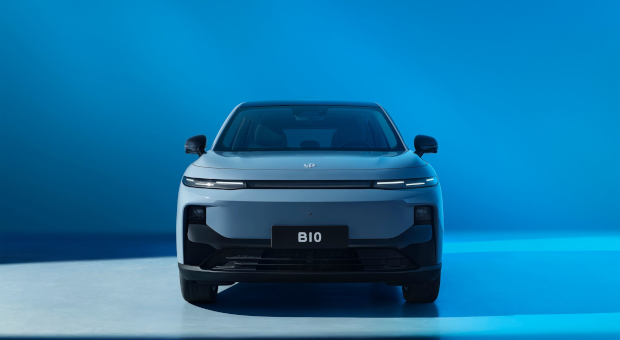
Nepal’s roads also present a different challenge from the conditions where many EVs are tested. From congested Kathmandu streets to steep hill roads, rough surfaces, monsoon conditions, and long highway climbs, an EV needs more than impressive specifications on paper. In this Leapmotor B10 Review in Nepal, we’ll look at how its range, performance, comfort, ground clearance, charging, and ownership practicality translate to real-world Nepali driving.
Leapmotor B10 Price in Nepal
The Leapmotor B10 has been introduced in two variants, but there is an important distinction for buyers in Nepal. While the B10 Life has been officially launched with a 56.2 kWh battery, it is not currently ready for sale in the Nepali market. For now, the B10 Design is the variant available to Nepalese customers.
| Variant | Battery | Nepal Availability | Price |
|---|---|---|---|
| B10 Life | 56.2 kWh | Not currently available for sale | NPR 49.99 lakh* |
| B10 Design | 67.1 kWh | Available in Nepal | NPR 54.99 lakh |
The listed Life price reflects its announced pricing, but it should not be considered the current purchase price for a readily available B10 in Nepal.
For Nepali buyers, the B10 Design is therefore the key variant to consider. It gets the larger 67.1 kWh battery and a claimed WLTP range of 460 km, making it particularly relevant for buyers who want to use the SUV for both daily Kathmandu driving and longer trips across Nepal.
At NPR 54.99 lakh, the B10 Design enters a competitive price bracket in Nepal’s electric SUV market. Its value will ultimately depend on how its larger battery, rear-wheel-drive powertrain, technology, comfort and Nepal-specific driving capability compare with similarly priced alternatives.
Specifications at a Glance
The Leapmotor B10 Design is powered by a rear-mounted permanent magnet synchronous motor (PMSM), giving it a rear-wheel-drive (RWD) layout. It produces 160 kW (218 PS) and 240 Nm of torque, with the power sent directly to the rear wheels.
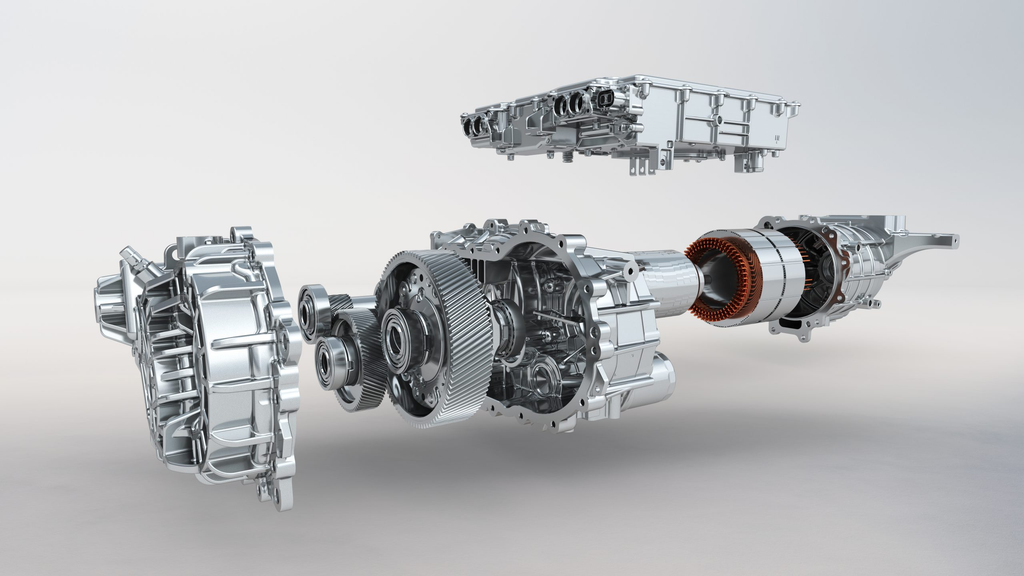
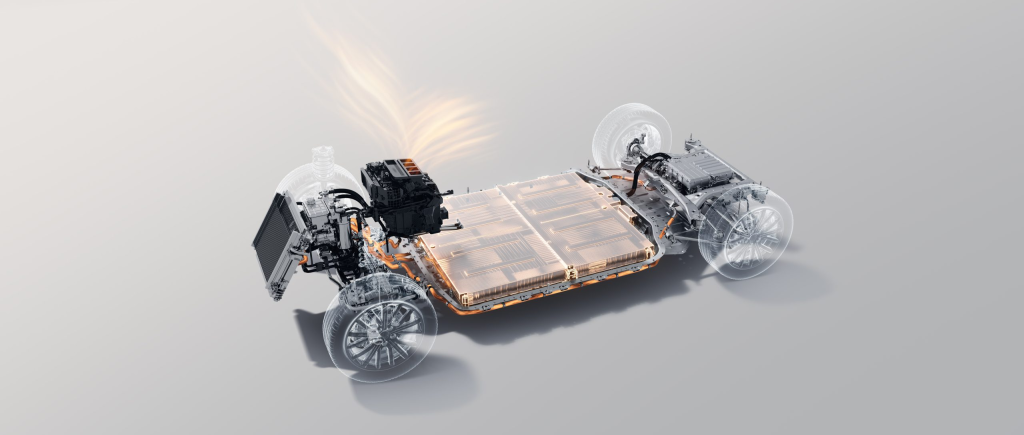
The Design variant gets a 67.1 kWh LFP battery, while the B10 platform is also offered with a 56.2 kWh battery in the Life variant. The B10 measures 4,515 mm long, 1,885 mm wide and 1,655 mm tall, with a 2,735 mm wheelbase and a curb weight of 1,845 kg.
| Specification | Leapmotor B10 Design |
|---|---|
| Motor | Permanent Magnet Synchronous Motor |
| Drive Type | Rear-Wheel Drive |
| Maximum Power | 160 kW / 218 PS |
| Maximum Torque | 240 Nm |
| Battery | 67.1 kWh LFP |
| Claimed WLTP Range | 460 km |
| Length | 4,515 mm |
| Width | 1,885 mm |
| Height | 1,655 mm |
| Wheelbase | 2,735 mm |
| Curb Weight | 1,845 kg |
| Ground Clearance | 180 mm |
On paper, the B10’s combination of RWD, 160 kW of power and a 67.1 kWh battery gives it a strong specification for its price bracket. However, specifications alone do not tell the complete story in Nepal. The following sections look at how these numbers translate into range, charging, performance and everyday usability on Nepali roads.
Leapmotor B10 Range and Charging
The Leapmotor B10 Design has a claimed WLTP range of 460 km, thanks to its 67.1 kWh LFP battery. However, real-world range is more important for Nepali buyers, where traffic, elevation changes, air-conditioning use and highway conditions can significantly affect EV efficiency.
During mixed driving around Kathmandu and on highway routes with the AC running, the B10 Design delivered around 370–400 km on a full charge. In heavy stop-and-go valley traffic, where regenerative braking can recover more energy, efficiency reached around 14.5–15.2 kWh/100 km, translating to roughly 410 km of real-world range under those conditions.
For Nepal, the 370–400 km real-world figure is the more useful number to consider. It provides enough range for regular Kathmandu commuting while also offering flexibility for longer journeys, although actual range will vary with driving style, road gradients, traffic and climate.
Charging the Leapmotor B10
The B10 Design supports 11 kW AC charging, with a full charge taking around 8 hours according to the provided data. With a 7.4 kW home wallbox, the larger battery takes roughly 9.5 hours.
For faster top-ups, the Design supports DC fast charging at up to 168 kW. On 60 kW and 120 kW highway charging stations, a 30–80% top-up took approximately 32–35 minutes.
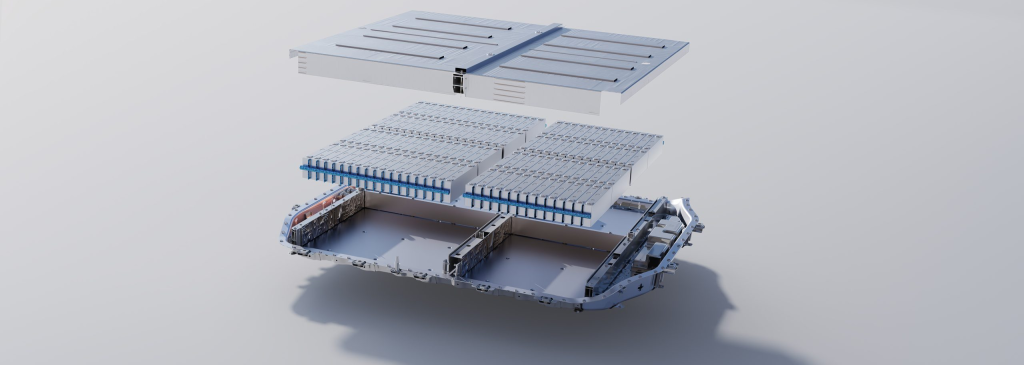
Charging cost: A full home charge of the 67.1 kWh battery costs roughly NPR 700–800 using the stated domestic electricity tariff, while a full cycle using public DC fast charging costs approximately NPR 1,000–1,200. The B10 Design also supports V2L, allowing the battery to power compatible 220V appliances and emergency electronics.
For Nepali buyers, the combination of 400 km-class real-world range and fast DC charging makes the B10 Design well suited to both daily urban use and longer highway journeys, provided suitable charging infrastructure is available along the route.
Performance and Driving Experience
The Leapmotor B10 Design produces 160 kW (218 PS) and 240 Nm of torque through its rear-wheel-drive powertrain. It can accelerate from 0–100 km/h in 8.0 seconds, giving it enough performance for both everyday Kathmandu driving and confident highway overtaking.
What stands out is the way the power is delivered. The throttle response is immediate but progressive, while the RWD layout helps transfer weight to the rear axle under acceleration. This gives the B10 a composed feel without the torque-steer that can sometimes be experienced in powerful front-wheel-drive EVs.

The B10 offers Eco, Comfort, Sport and Custom driving modes, along with three steering-weight settings and three levels of regenerative braking. Comfort mode keeps power delivery smooth for city driving, while Sport mode gives the accelerator a sharper response when quicker acceleration is needed.
Its electronically limited top speed is 170 km/h, while the tested 100–0 km/h braking distance was under 38 metres without noticeable brake fade.
For Nepal, the B10’s performance is less about outright speed and more about usable power on varying roads. The combination of instant EV torque, RWD traction and selectable driving modes gives it enough flexibility for congested city streets, open highways and the frequent elevation changes found across Nepal.
Leapmotor B10 Performance on Hilly Roads
The B10’s rear-wheel drive and 240 Nm of instant torque make it capable on Nepal’s steep roads. It handled climbs around Chandragiri and Nagarkot confidently, including wet and loose surfaces.
Hill Hold Control and Hill Descent Control also help on steep climbs and descents, making mountain switchbacks easier to manage. Its 180 mm ground clearance is adequate for normal roads and speed breakers, although rough rural tracks require caution.
Driving the Leapmotor B10 in Kathmandu
The B10 is well suited to Kathmandu’s stop-and-go traffic. Its higher regenerative braking setting allows near single-pedal driving, helping reduce fatigue during long traffic jams.
Its light steering and tight turning circle make it easier to navigate narrow streets and busy gallis. Parking is another strong point, with the 360-degree HD surround-view camera providing a clear view around the vehicle and making tight basement parking easier.
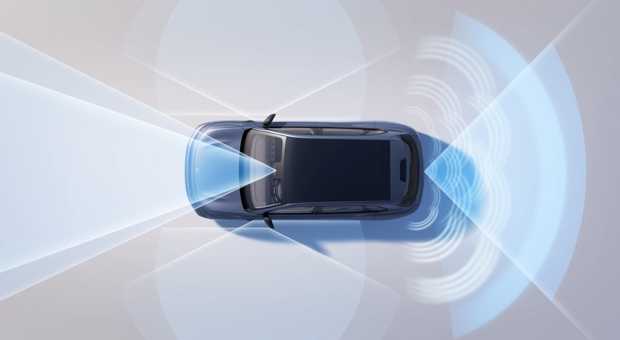
For daily Kathmandu use, the B10 combines smooth power delivery, useful regeneration and good visibility around the vehicle, making it a practical choice for urban driving.
Highway Driving
The Leapmotor B10 feels stable on Nepal’s highways, with its low battery center of gravity and stiff body structure helping it remain composed through high-speed curves. On sustained 80–90 km/h cruising, the Design variant can deliver a 350+ km highway range under suitable conditions.
Its instant mid-range acceleration is another advantage when overtaking. The B10 can quickly build speed between 50 and 90 km/h, making it easier to pass slower vehicles and long trucks on highways.
Interior, Comfort and Practicality
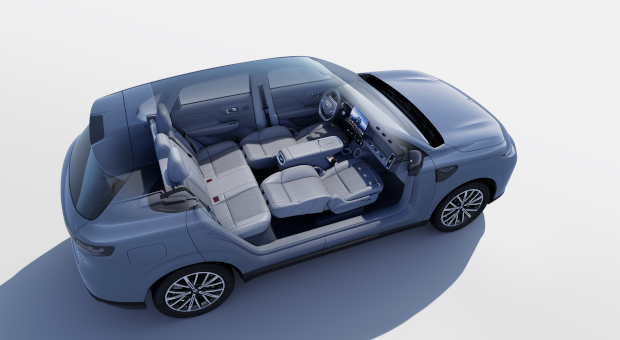
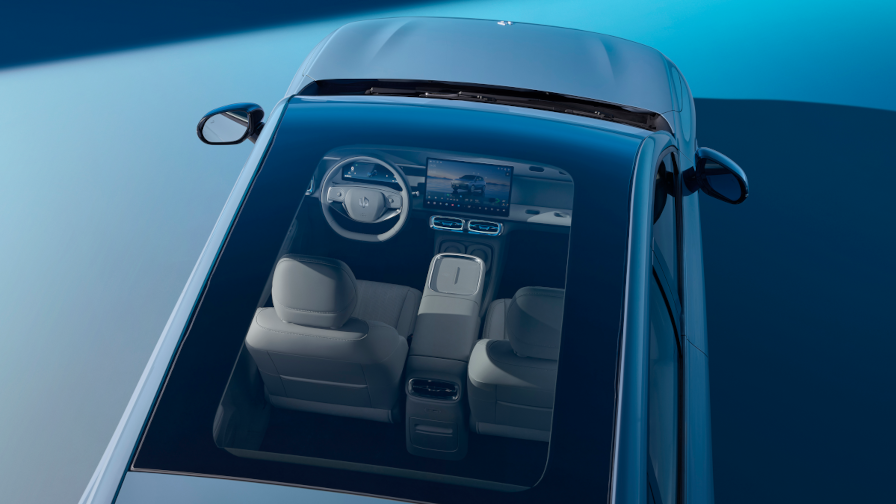
The Leapmotor B10 has a clean, minimalist cabin with soft-touch dashboard materials, a floating center console and, on the Design variant, dual-tone leatherette upholstery. The overall layout gives the cabin a modern, premium feel without becoming overly complicated.

Comfort is another strong point. The driver’s seat gets 6-way power adjustment with heating and ventilation, while the front passenger seat gets 4-way power adjustment with heating and cooling. The front seats can also fold completely flat, adding some flexibility for relaxing during longer journeys.
For Nepal’s climate, the panoramic glass sunroof with an electric fabric roller sunshade is particularly useful for managing strong sunlight. The cabin also gets 64-colour ambient lighting, adding to the B10’s modern character.
Rear-Seat Experience
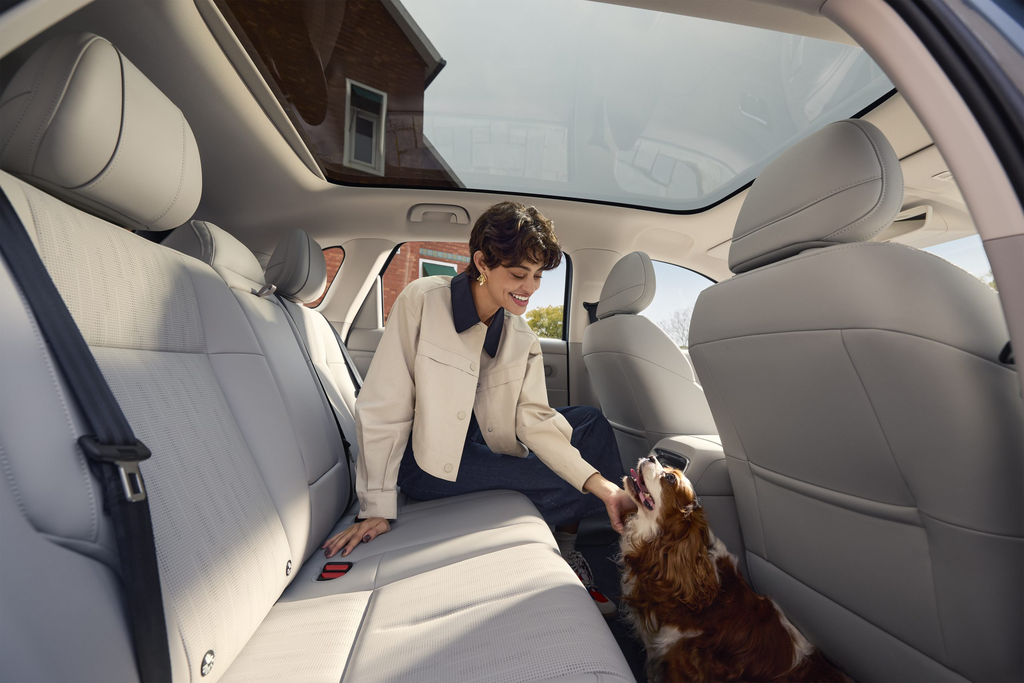
The B10’s 2,735 mm wheelbase creates generous rear-seat space, with ample legroom and a relatively flat floor that can comfortably accommodate three adults. Even taller passengers get good headroom despite the sloping roofline.

For family use, the rear seats also get dedicated AC vents, USB-A and USB-C ports, a fold-down center armrest with cup holders, and ISOFIX mounts. This makes the B10 a practical option for families who regularly travel together.
Boot Space and Practicality
The Leapmotor B10 offers 420 litres of boot space in its standard configuration. Folding the 60:40 split rear seats expands the cargo capacity to 1,300 litres, giving enough flexibility for larger luggage or family trips.
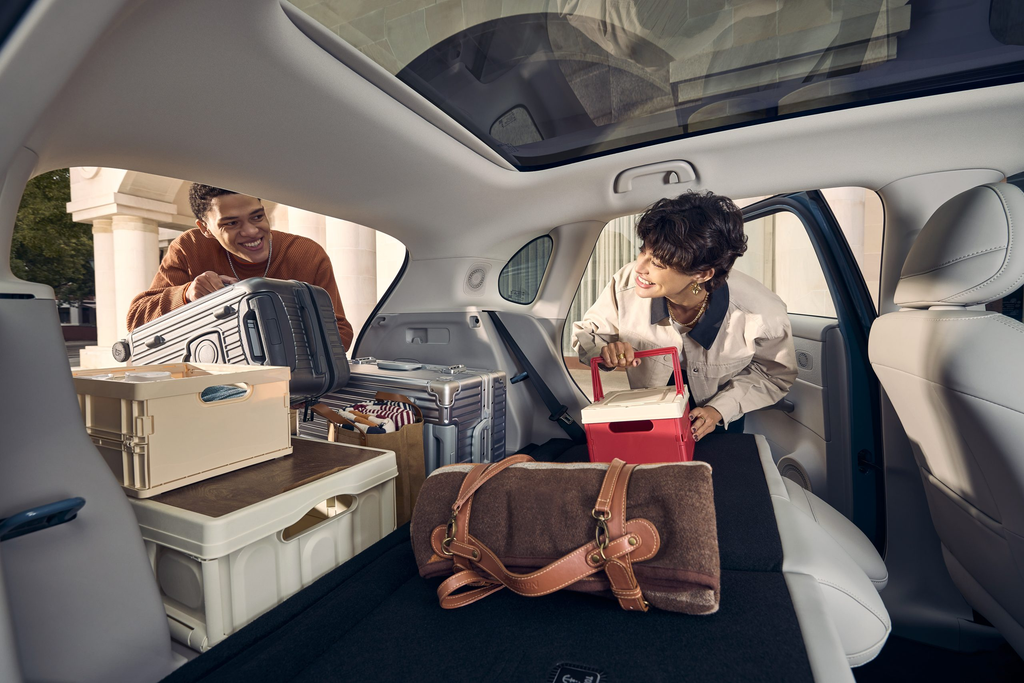
The wide tailgate opening and low loading lip make loading luggage easier. The Design variant also gets an electric power tailgate with memory function, while underfloor storage provides space for the portable charger and tool kit.
For Nepali families, this combination makes the B10 practical for both daily errands and longer highway trips where additional luggage is needed.
Technology and Safety
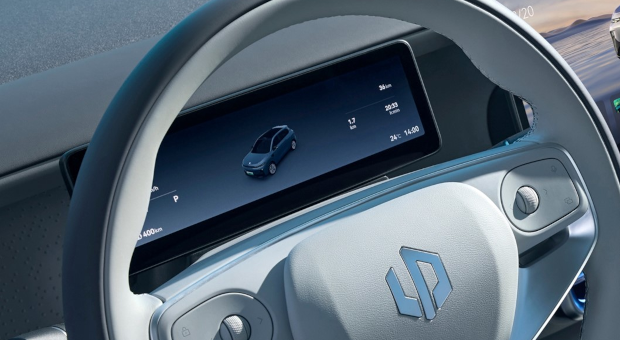
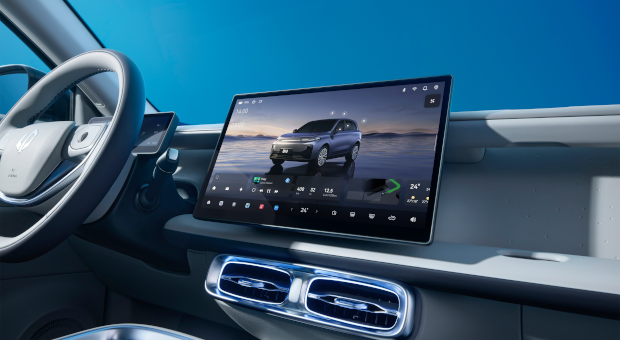
The B10 Design gets a 14.6-inch 2.5K touchscreen running Leapmotor OS 4.0 PLUS, paired with an 8.8-inch digital driver display. It also features OTA updates, Bluetooth, online music streaming, NFC access and a 50W cooled wireless charging pad. The Design variant adds a 12-speaker high-fidelity audio system.
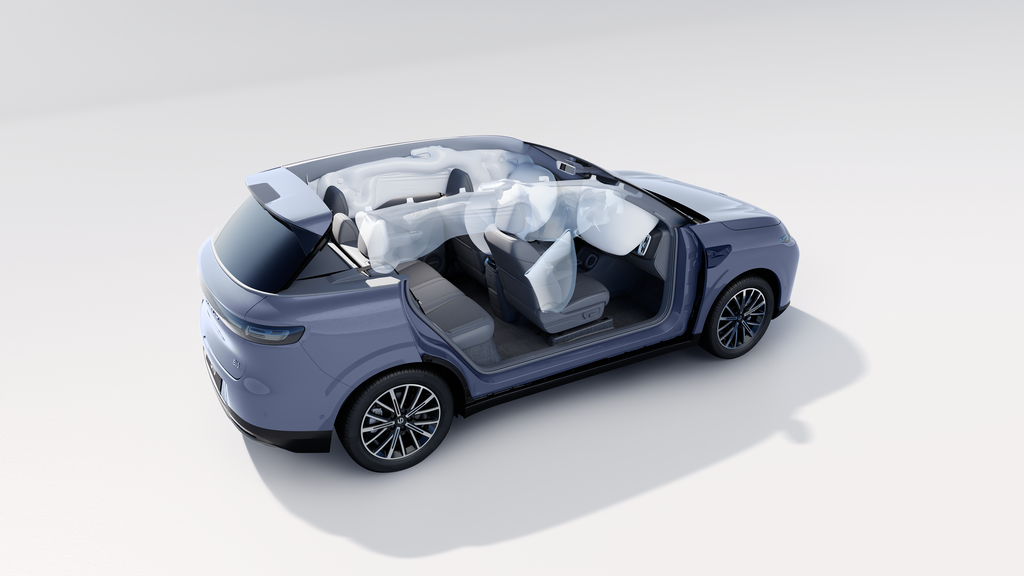
Safety is another major highlight, with six airbags and a comprehensive Level 2 ADAS package featuring 17 active safety functions. These include adaptive cruise control, lane centering, automatic emergency braking, blind-spot detection and rear cross-traffic braking.
For Nepal, features such as AEB, blind-spot monitoring and rear cross-traffic braking can be especially useful on busy urban roads and highways where traffic conditions can change quickly.
Ride Quality and Ground Clearance
The Leapmotor B10 offers a comfortable and composed ride on Kathmandu’s patched roads and broken tarmac. Its MacPherson strut front and multi-link rear suspension absorb most potholes well, although sharper bumps can still be felt inside the cabin.
Its 180 mm ground clearance is sufficient for regular city roads and speed breakers. However, extra care is needed on deep monsoon ruts, rough rural roads, and heavily damaged sections, particularly when the B10 is fully loaded with passengers and luggage.
Ownership in Nepal
The Leapmotor B10 is distributed in Nepal by Shangrila Motors, giving buyers access to an official dealer and service network. This is important for long-term ownership, particularly as newer EV brands establish their presence in Nepal.
Service and spare parts: Regular EV servicing should remain relatively simple because there are fewer mechanical components than in a petrol vehicle. However, the availability and cost of B10-specific body, suspension and electronic parts will be worth considering as the model is still new to Nepal.
Warranty: Buyers should also check the latest vehicle and battery warranty terms with the authorized distributor before purchase.
Running costs: Home charging should make the B10 considerably cheaper to run than a comparable petrol SUV. Based on the supplied figures, a full home charge of the 67.1 kWh battery costs roughly NPR 700–800.
Resale value: This remains harder to predict. The B10 is new to Nepal, so its long-term resale performance will depend on battery health, after-sales support, spare-parts availability and how the Leapmotor brand develops in the local market.
Pros and Cons
The Leapmotor B10 has several strengths for Nepali buyers, particularly its range, performance and feature package. However, there are also a few points to consider before buying.
Pros
- Strong 370–400 km real-world range
- Powerful 160 kW rear-wheel-drive powertrain
- Spacious cabin with comfortable rear seats
- Fast DC charging support
- Comprehensive Level 2 ADAS safety package
- 180 mm ground clearance suits most everyday Nepali roads
- Good performance on steep and hilly routes
- Well equipped for its NPR 54.99 lakh price
Cons
- 180 mm clearance still requires care on badly damaged rural roads and deep monsoon ruts
- Long-term resale value is difficult to predict
- Spare-parts availability is still developing as the B10 is new to Nepal
- Leapmotor’s service footprint is not yet as established as longer-standing brands in Nepal
Leapmotor B10 Alternatives in Nepal
At NPR 54.99 lakh, the Leapmotor B10 sits among several capable electric SUVs in Nepal. The closest alternatives include the OMODA E5 Pro, BYD Atto 3 and Deepal S07.
The OMODA E5 Pro is the closest on price, at around NPR 51.59 lakh. It is worth considering if you prefer its design and front-wheel-drive setup. The B10, however, offers a larger 67.1 kWh battery and a more powerful 160 kW RWD motor based on the current comparison data.
The BYD Atto 3 is another important alternative. It costs more, but BYD has a more established presence in Nepal. Buyers who prioritize brand familiarity and ownership confidence may prefer it, while the B10 offers stronger specifications for the money.
The Deepal S07 is a larger and more premium alternative. However, at around NPR 74.99 lakh, it sits considerably above the B10’s price bracket. It makes more sense for buyers willing to spend extra for a larger vehicle and a more premium positioning.
Overall, the OMODA E5 Pro is the closest price rival, while the Atto 3 and Deepal S07 become relevant if you are willing to increase your budget.
Who Should Buy the Leapmotor B10?
The Leapmotor B10 is best suited to families, professionals and daily EV commuters who want a spacious electric SUV without moving into a much higher price bracket.
It makes particular sense if most of your driving is within Kathmandu, with occasional trips on highways and hilly routes. Its strong real-world range, comfortable cabin and 160 kW RWD powertrain also make it suitable for buyers who regularly travel outside the Valley.
For NPR 54.99 lakh, the B10 Design is especially appealing to buyers who prioritize range, performance, technology and cabin space in one package.
Who Should Consider Alternatives?
The Leapmotor B10 may not be ideal if you frequently drive on very rough rural or mountain roads, where higher ground clearance and a more rugged setup could be useful.
You may also prefer an alternative if an established service network, easier spare-parts availability and proven resale value are your main priorities. The B10 is still relatively new in Nepal, so its long-term ownership picture is developing.
If most of your driving is limited to Kathmandu or other urban areas, you may not need a larger NPR 54.99 lakh electric SUV. More affordable city-focused EVs such as the Nammi Box can offer a more compact and economical option. The Tata Punch EV is another alternative for buyers who want a smaller electric crossover for daily urban use while retaining SUV-like practicality.
In short, the B10 makes more sense if you will actually use its larger battery, cabin space, performance and long-distance capability.
Verdict: Is the Leapmotor B10 Worth Buying in Nepal?
The Leapmotor B10 Design is a compelling electric SUV for Nepal, especially at its NPR 54.99 lakh price. Its 67.1 kWh battery, strong real-world range, 160 kW RWD powertrain, spacious cabin and extensive technology package give it plenty of value on paper and on the road.
More importantly, the B10 works well across varied Nepali driving conditions. It is easy to manage in Kathmandu traffic, capable on steep hill roads and comfortable enough for longer highway journeys. The 180 mm ground clearance is also practical for most everyday roads, although badly damaged rural sections still require care.
Its biggest uncertainties are long-term resale value, spare-parts availability and the developing service footprint. Buyers who place greater importance on an established ownership ecosystem may prefer a more established rival.
Overall, the B10 is best suited to buyers looking for range, performance, space and technology at a competitive price.
Tecnech Rating: 8.4/10