
The Tata Punch EV is a compact electric SUV aimed at buyers who want an easy-to-drive city EV without giving up the practicality of higher ground clearance. In Nepal, that combination makes it particularly interesting for daily Kathmandu driving as well as occasional trips on rougher and hilly roads.
With prices starting at Rs 32.99 lakh (NAIMA Offer), the Punch EV sits in a competitive part of Nepal’s EV market. But does its range, performance, comfort and features justify the price? In this Tata Punch EV review in Nepal, we put those aspects into the context of everyday Nepali driving.
Tata Punch EV Price in Nepal
The Tata Punch EV is priced from Rs 33.98 lakh in Nepal, with three variants available. The entry-level Empowered 32 kWh is priced at Rs 33.98 lakh as an introductory price, while the 40 kWh Empowered costs Rs 36.99 lakh. The range-topping Empowered+ S 40 kWh comes in at Rs 37.99 lakh.
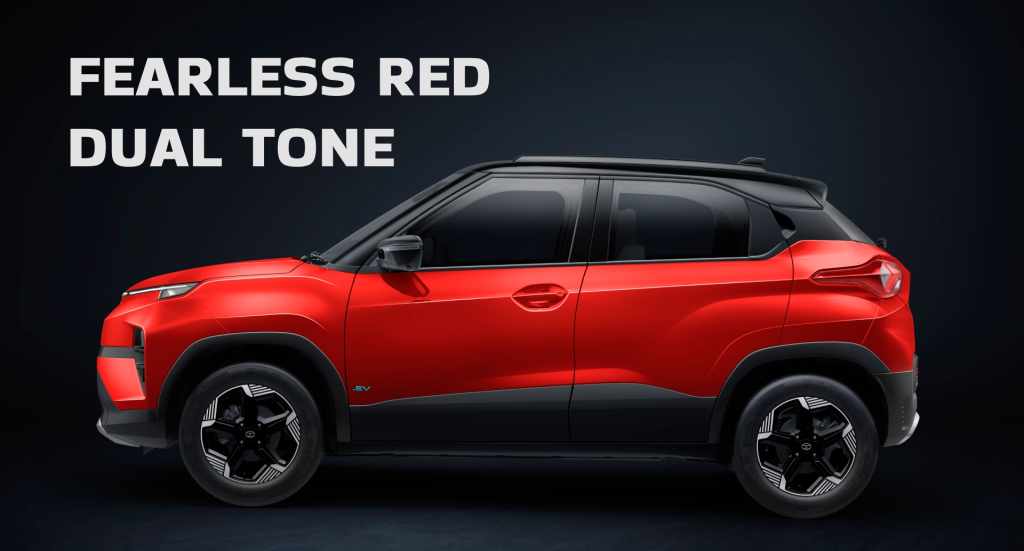
| Variant | Battery | Price in Nepal |
|---|---|---|
| Empowered | 32 kWh | Rs 33.98 lakh* |
| Empowered | 40 kWh | Rs 36.99 lakh |
| Empowered+ S | 40 kWh | Rs 37.99 lakh |
*The 32 kWh variant’s introductory price is expected to settle around Rs 33.98 lakh.
At this price, the Punch EV enters a competitive segment where buyers have several alternatives to consider. The 40 kWh variants are particularly interesting if you plan to use the car beyond daily city commuting, while the 32 kWh version makes more sense for buyers whose driving is primarily urban.
The top-spec Empowered+ S 40 kWh costs only Rs 1 lakh more than the regular 40 kWh variant, making the difference in features an important consideration when choosing between the two.
Tata Punch EV Specifications at a Glance
The Tata Punch EV is available with two battery and motor combinations. The 32 kWh version gets a 65 kW motor, while the larger 40 kWh battery is paired with a more powerful 95 kW motor. The difference is noticeable on paper and becomes more relevant if you regularly drive on highways or hilly roads.
| Specification | 32 kWh | 40 kWh |
|---|---|---|
| Battery | 32 kWh LFP | 40 kWh LFP |
| Motor Power | 65 kW (~88 hp) | 95 kW (~129 hp) |
| Torque | 114 Nm | 154 Nm |
| 0–100 km/h | ~13.5 seconds | Under 9 seconds |
| Length | ~3,857 mm | ~3,857 mm |
| Width | ~1,742 mm | ~1,742 mm |
| Height | ~1,633 mm | ~1,633 mm |
| Wheelbase | 2,445 mm | 2,445 mm |
| Ground Clearance | 190–195 mm | 190–195 mm |
| Boot Space | 366 litres | 366 litres |
| Frunk | ~14 litres | ~14 litres |
Both versions use liquid-cooled lithium battery packs, while the compact dimensions and generous ground clearance make the Punch EV well suited to the mix of urban and uneven roads found across Nepal.
For buyers who want stronger acceleration and more flexibility for longer drives, the 40 kWh version is the more capable choice. The 32 kWh version, meanwhile, should be adequate for buyers whose Punch EV will spend most of its time handling daily city driving.
Tata Punch EV Range and Charging
The Tata Punch EV offers a claimed range of around 250 km with the 32 kWh battery and 325 km with the 40 kWh version. In real-world Nepali driving, expect roughly 200–220 km and 230–280 km, respectively, depending on traffic, hills, AC use and highway speeds.
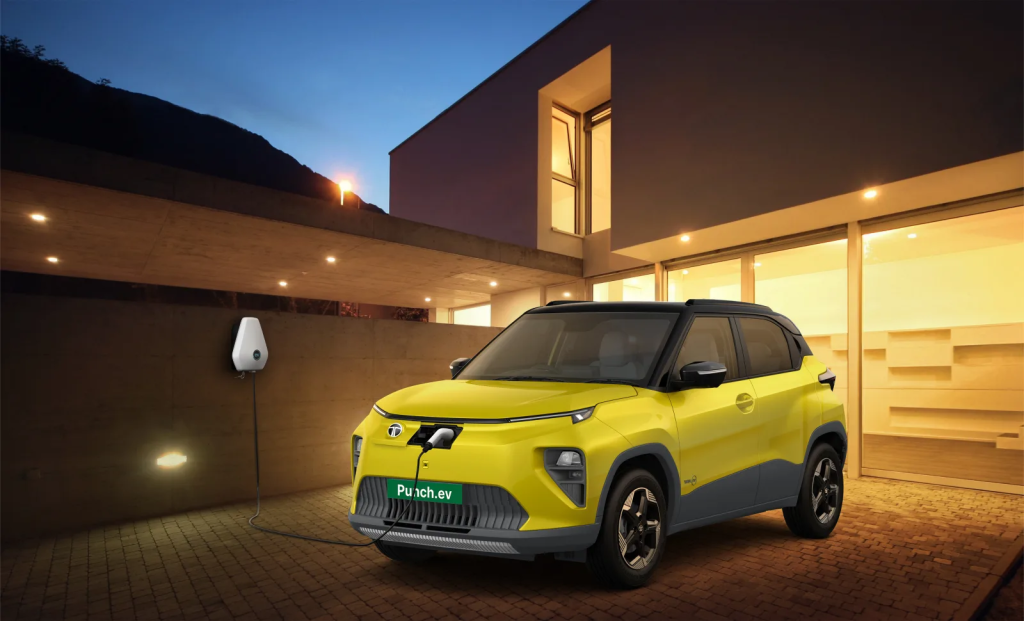
It supports CCS2 DC fast charging, taking around 26 minutes from 20–80% on a 65 kW charger. Its 3.3 kW AC charger takes roughly 8–9 hours for a full charge.
For mostly Kathmandu driving, the 32 kWh version is sufficient. For frequent highway and hilly trips, we’d recommend the 40 kWh version.
Performance and Driving Experience
The Tata Punch EV feels noticeably more responsive in its 40 kWh version, thanks to the 95 kW motor and 154 Nm of torque. The claimed 0–100 km/h time of under 9 seconds gives it enough punch for quick overtakes and confident acceleration when joining faster-moving traffic. The 32 kWh version is less eager, with its 65 kW motor taking around 13.5 seconds to reach 100 km/h, but it should still feel adequate for regular city use.
What we particularly like is how the Eco, City and Sport driving modes change the character of the car. Eco keeps things relaxed, while Sport makes the throttle response noticeably sharper. On highways and uphill sections, that extra response is useful when you need a quick burst of acceleration.
The Punch EV also gets four levels of regenerative braking, controlled through paddle shifters, along with a customizable single-pedal mode. In Kathmandu’s stop-and-go traffic, this can make driving considerably less tiring by reducing the need to constantly move between the accelerator and brake pedals.
For Nepal, we’d pick the 40 kWh version for its stronger performance. The extra power is not just about acceleration figures; it gives the car more confidence when carrying passengers or tackling climbs.
Driving the Tata Punch EV in Kathmandu
The Tata Punch EV feels well suited to Kathmandu’s stop-and-go traffic. Its compact size makes it easier to work through crowded streets and tight parking spaces, while the good visibility helps when navigating narrower roads.
The regenerative braking system is particularly useful here. With multiple regen levels and a customizable single-pedal mode, you can slow the car smoothly without relying heavily on the brake pedal. That makes crawling through traffic less tiring and can also help improve efficiency.
Parking is another area where the Punch EV’s compact dimensions work in its favour. On higher trims, the 360-degree camera is useful when squeezing into tight parking spaces and navigating narrow lanes.
In mixed city driving, consumption can sit around 10–14 kWh/100 km, although air-conditioning use and driving style can move that figure higher or lower. For a daily Kathmandu commute, this makes the Punch EV an easy car to live with, particularly if you have access to home charging.
How Does the Tata Punch EV Perform on Nepal’s Hilly Roads?
This is where the Tata Punch EV’s SUV-like design starts to make more sense for Nepal. The car has a claimed 32% restart gradeability, giving it the ability to tackle steep climbs and hairpin sections with confidence. The low-mounted battery also keeps the centre of gravity low, helping the car feel planted on winding roads.
The 190–195 mm ground clearance is another advantage. On Nepal’s uneven roads, deep speed breakers, gravel sections and monsoon-damaged surfaces, the extra clearance gives you more freedom to choose your line without constantly worrying about scraping the underside.
Hill-hold and hill-descent control further add to the confidence, particularly when negotiating steep roads. For drivers who regularly travel beyond Kathmandu towards hilly destinations, the Punch EV’s combination of ground clearance, instant electric torque and stable handling makes it a more convincing option than its compact dimensions might suggest.
For Nepal’s hills, we’d favour the 40 kWh version, especially when the car is regularly driven with passengers or luggage. The additional motor output gives it a stronger performance reserve for climbs.
Highway Driving
On the highway, the Tata Punch EV feels stable and composed at around 80–100 km/h. There is some body movement through corners, but it remains controlled, while the steering feels planted enough for regular intercity driving.
The 40 kWh version is the better choice for highway use. Its stronger motor makes overtaking more straightforward, particularly when you need a quick burst of acceleration. Switching to Sport mode also gives the car a sharper response when required.
The bigger consideration on Nepal’s highways is range. At sustained speeds above 100 km/h, especially with headwinds or frequent acceleration, consumption can rise to around 16–20 kWh/100 km. That means the highway range will be noticeably lower than the figure you may see in official testing.
For longer trips, particularly on routes where charging stations are limited, it is therefore better to plan your charging stops rather than rely entirely on the claimed range.
Interior, Comfort and Practicality
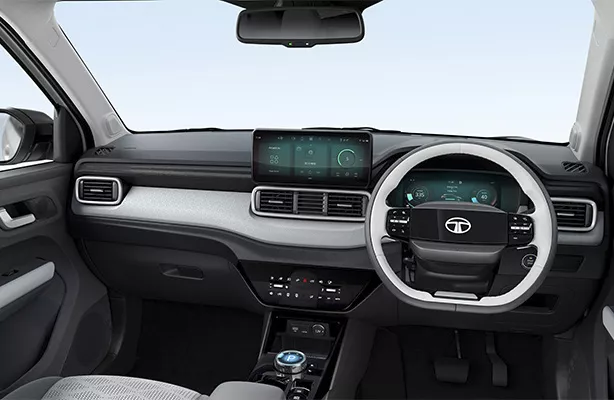
The Tata Punch EV’s cabin feels more premium than its compact dimensions suggest. The interior has a solid, well-finished feel, with leatherette seats, a leather-wrapped steering wheel and soft-touch materials in the areas you interact with most. Compared with a basic city car, it feels like Tata has put more emphasis on making the cabin comfortable for everyday use.
Higher variants get a 10.25-inch touchscreen and 10.25-inch digital driver’s display, giving the dashboard a modern feel. The screen graphics are clear, although some of the information can feel a little small when you’re glancing at it while driving.
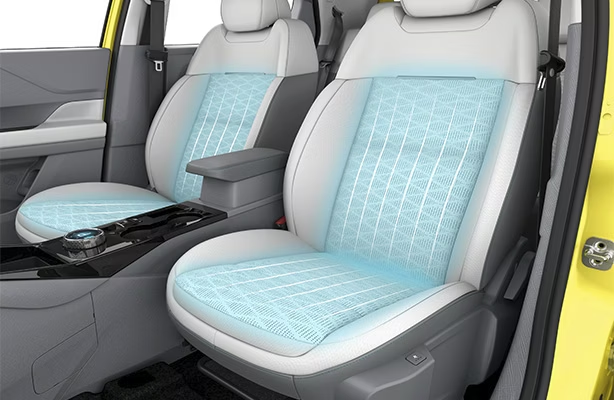
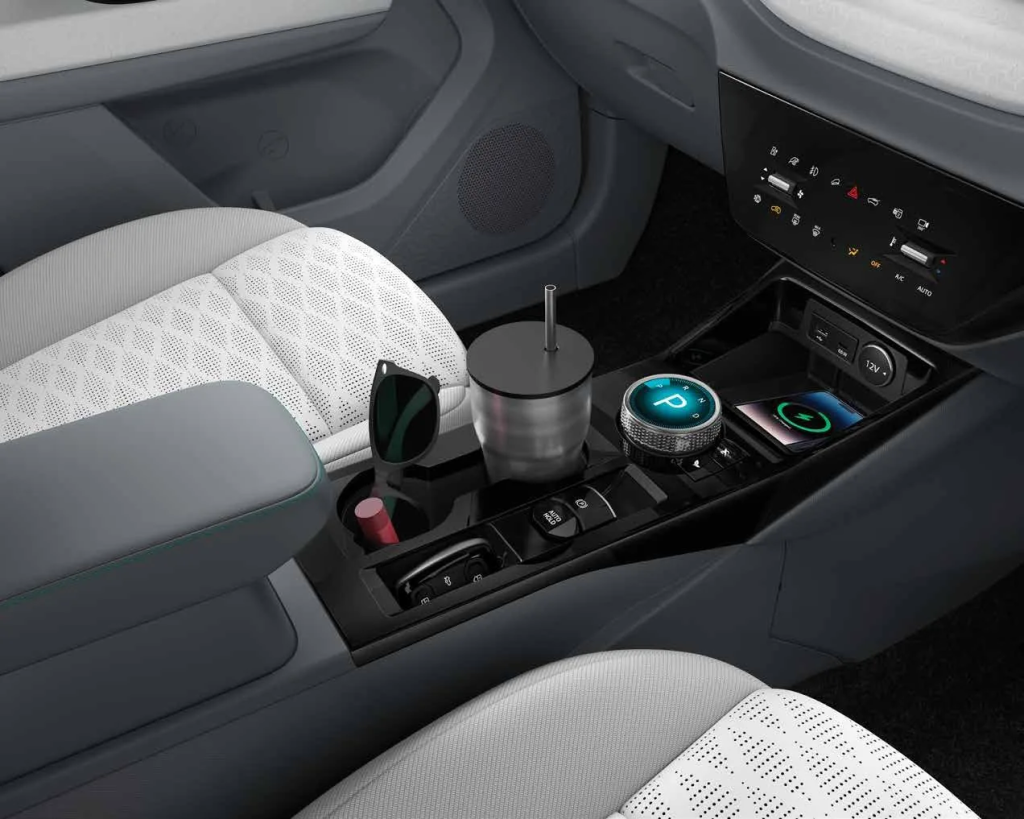
For Nepal’s changing weather, the comfort equipment is useful rather than just decorative. Ventilated front seats, automatic climate control with rear vents, wireless charging and an air purifier with an AQI display make the Punch EV better suited to spending long periods in Kathmandu traffic.
Overall, the cabin strikes a good balance between everyday practicality and premium features, although rear-seat space needs a closer look if the car will regularly carry a full family.
Rear-Seat Experience
The rear seats of the Tata Punch EV are comfortable enough for typical family use, with adequate legroom and a flat floor that makes it easier for passengers to find a natural seating position.
The main limitation is headroom. Taller passengers, particularly those above around 5’8″, may find the roof a little close, especially on versions equipped with the sunroof. This becomes more noticeable on Nepal’s uneven roads, where the car can move over bumps and dips.
For a typical Nepali family with children and one adult in the back, the space should be perfectly manageable. However, if you regularly carry three adults in the rear or taller passengers, we’d recommend sitting in the car before making the purchase.
Rear-Seat Experience
The rear seats of the Tata Punch EV are comfortable enough for typical family use, with adequate legroom and a flat floor that makes it easier for passengers to find a natural seating position.
The main limitation is headroom. Taller passengers, particularly those above around 5’8″, may find the roof a little close, especially on versions equipped with the sunroof. This becomes more noticeable on Nepal’s uneven roads, where the car can move over bumps and dips.
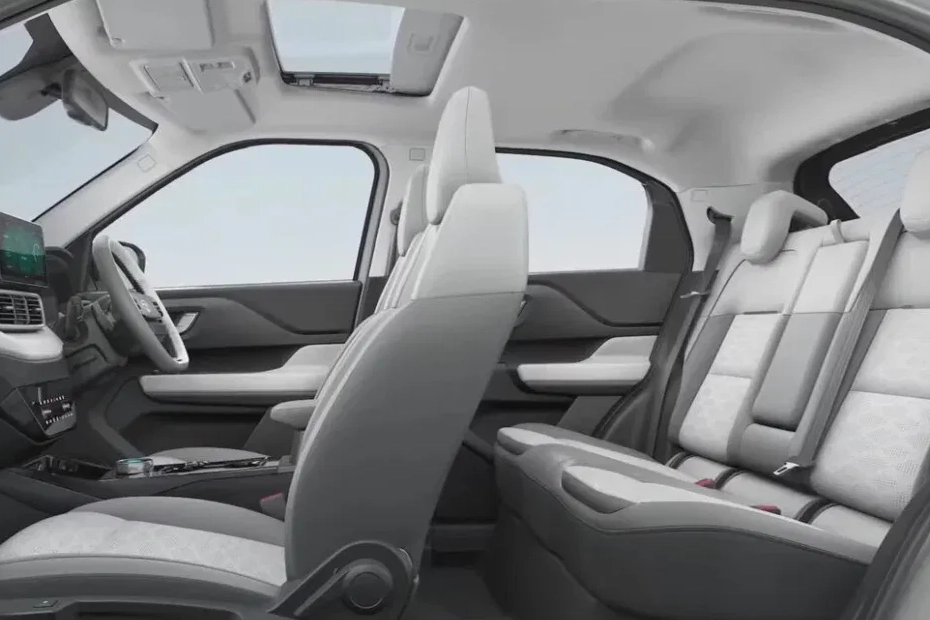
For a typical Nepali family with children and one adult in the back, the space should be perfectly manageable. However, if you regularly carry three adults in the rear or taller passengers, we’d recommend sitting in the car before making the purchase.
Boot Space and Practicality
The Tata Punch EV offers 366 litres of boot space, which is a useful amount for a compact EV. The boot is relatively deep and wide, with a flat loading lip that makes it easier to load everyday luggage. For a small family, there should be enough room for bags and luggage on a weekend trip.
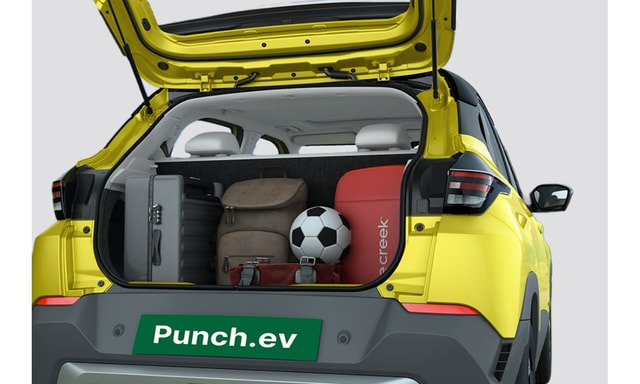
There is also a small 14-litre frunk, which is better suited to storing charging cables and smaller items. This is a thoughtful addition because it keeps the main boot free for luggage.
For everyday use in Nepal, the Punch EV’s boot should be adequate for grocery runs, airport luggage and regular family use. It may not be the biggest boot in this segment, but the usable shape and additional frunk make the available storage practical.
Technology and Safety
The Tata Punch EV does a good job of balancing useful technology with everyday practicality. The higher variants get a 10.25-inch HARMAN touchscreen with wireless Android Auto and Apple CarPlay, along with a matching 10.25-inch digital driver’s display. The interface gives the cabin a modern feel without making the dashboard overly complicated.
For daily driving in Nepal, some of the more useful features are the 360-degree camera, blind-spot view and connected-car functions. These are especially handy when dealing with narrow Kathmandu lanes and tight parking spaces. The connected features can also provide functions such as remote vehicle status, charging control and vehicle tracking, depending on the variant.
Safety is one of the Punch EV’s strongest points. It has received a 5-star Bharat NCAP rating, with six airbags, ESC, ABS with EBD, TPMS, ISOFIX and hill-hold among its safety equipment. Higher variants add the 360-degree camera and blind-spot monitoring.
For a car that will regularly face Nepal’s unpredictable roads, traffic and hilly conditions, this combination of safety equipment and driver assistance makes the Punch EV feel reassuring rather than simply feature-loaded.
Ride Quality on Nepal’s Roads
The Tata Punch EV has a comfortable and composed ride, particularly on the broken and uneven surfaces that are common on Nepali roads. Its suspension does a good job of absorbing smaller bumps, while the EV’s low centre of gravity helps it remain planted through corners.
That combination works well for Kathmandu’s patched roads and speed breakers, but it becomes even more useful when you leave the city. 190–195 mm of ground clearance gives the Punch EV enough breathing room over rough sections, deep speed breakers and monsoon-damaged roads.
The car also feels relatively quiet because there is no engine noise competing with the suspension and road sounds. This makes the cabin more relaxed during daily commuting and longer drives.
Overall, the Punch EV’s ride is one of its stronger qualities for Nepal. It is comfortable enough for city use while retaining the ground clearance and stability needed for rougher roads.
Ground Clearance and Rough-Road Capability
The Tata Punch EV’s 190–195 mm ground clearance is one of its biggest advantages for Nepal. It gives the car enough clearance to deal with uneven roads, deep speed breakers and monsoon-damaged sections without making every rough patch a cause for concern.
This is particularly useful once you move beyond Kathmandu’s main roads. Nepal’s combination of steep roads, broken surfaces and seasonal road damage means ground clearance can be more important than having a purely city-focused EV.
The battery is positioned low in the chassis, keeping the centre of gravity down and helping the Punch EV feel stable on winding roads. Combined with hill-hold and hill-descent control, it gives the car a reassuring character when tackling climbs and descents.
For buyers who regularly travel through hilly areas or rough rural roads, this is one of the Punch EV’s strongest practical advantages.
Tata Punch EV Service and Dealer Network
For an EV buyer in Nepal, service support is just as important as the car itself, particularly when the vehicle uses a dedicated electric powertrain. Tata has an established presence in Nepal, which gives the Punch EV an advantage when it comes to access to servicing and technical support.
The bigger question is how easily you can get support outside the major cities. If you regularly travel through Nepal’s hilly or remote regions, it is worth considering the location of authorised service facilities before buying, rather than assuming the same level of support will be available everywhere.
For buyers based in Kathmandu and other major urban areas, the Punch EV is a relatively straightforward ownership proposition. However, anyone planning frequent long-distance travel should keep the service network in mind when choosing an EV.
Our take: Tata’s established local presence is a positive for the Punch EV, but the availability of EV-specific support can still vary depending on where you live and travel.
Spare Parts and Maintenance
One of the practical questions for any EV in Nepal is how easy it will be to keep the car on the road when something needs replacing. For the Punch EV, Tata’s established presence in the market is reassuring, but spare-parts availability can still depend on the component and location.
Routine EV maintenance is generally simpler than that of a petrol car because there is no engine oil, spark plugs or conventional engine-related servicing to worry about. The focus is instead on items such as brakes, tyres, suspension components and the electric powertrain.
For owners in Kathmandu, access to service facilities should be relatively straightforward. However, if you live outside the major cities or frequently travel through Nepal’s hilly and remote areas, it is worth checking parts availability and service support in your area before purchasing.
Our take: The Punch EV benefits from Tata’s established local presence, but buyers should still consider the availability of EV-specific parts and support when planning long-term ownership.
Tata Punch EV Warranty
The Tata Punch EV comes with warranty coverage for both the vehicle and its battery, which is an important consideration when buying an EV in Nepal. The battery warranty is particularly reassuring because the battery is one of the most expensive components of an electric car.
For long-term ownership, the warranty also adds some peace of mind when travelling across Nepal’s hilly roads and changing climatic conditions, where the car can experience more demanding driving conditions than a typical city commute.
However, warranty terms can vary by market and may depend on the specific variant and purchase package. We recommend confirming the exact vehicle and battery warranty offered by the authorised Tata distributor in Nepal before booking.
Overall, the warranty support adds confidence to the Punch EV’s ownership proposition, but the specific Nepal warranty terms should be checked at the time of purchase rather than relying on international specifications.
Tata Punch EV Running Cost in Nepal
The running cost is one of the strongest reasons to consider the Tata Punch EV in Nepal. With no petrol engine to feed and fewer mechanical components requiring regular maintenance, everyday ownership can be considerably simpler than with a conventional petrol car.
For daily Kathmandu driving, the car’s mixed-city efficiency of around 10–14 kWh/100 km means your electricity consumption remains relatively low. Your actual cost will depend on your home electricity tariff, charging losses and how heavily you use the air-conditioning.
The savings become more noticeable for people who drive regularly. However, long highway journeys can increase consumption, particularly at sustained speeds, so the cost advantage is not identical in every driving condition.
For a typical Nepali owner who can charge at home and primarily drives within the city, the Punch EV should be considerably cheaper to run than an equivalent petrol vehicle.
Tata Punch EV Resale Value
The Tata Punch EV should hold a reasonable resale value in Nepal, but it is still too early to call it a proven long-term resale performer. Early used listings suggest around Rs 29–30 lakh for two-year-old examples, indicating moderate depreciation.
As with other EVs, the condition of the battery will be an important factor when the car eventually changes hands. Battery health, remaining warranty, service history and the overall condition of the vehicle can all influence what a second owner is willing to pay.
There is also another factor that is difficult to predict: Nepal’s rapidly changing EV market. New models with longer range and better technology could put pressure on the resale prices of older EVs over time.
For now, the Punch EV’s established brand presence and practical design work in its favour, but buyers should not purchase it purely on the expectation of strong resale value.
Tata Punch EV Pros and Cons
After looking at the Punch EV as a complete package for Nepal, its strengths are fairly clear. It gets excellent ground clearance, a comfortable cabin, strong safety credentials and smooth EV performance, while its compact size makes it easy to use in the city.
Pros
- 190–195 mm ground clearance is well suited to Nepal’s rough and uneven roads.
- Comfortable and relatively quiet cabin with a good feature list.
- Strong and smooth performance, particularly from the 40 kWh version.
- 5-star Bharat NCAP safety rating with six airbags and a comprehensive safety package.
- Practical 366-litre boot plus a small frunk.
Cons
- The price is relatively high for a compact EV in Nepal.
- Real-world range is noticeably lower than the claimed figures, especially on highways and hilly routes.
- Rear headroom can be restrictive for taller passengers.
- The 3.3 kW AC charger is relatively slow for a car in this price range.
Overall, the Punch EV’s strengths are largely centred around practicality, safety and Nepal-road suitability, while its biggest compromises are price and range.
Tata Punch EV Alternatives in Nepal
The Tata Punch EV faces strong competition in Nepal, especially around the Rs 33–40 lakh price range. Buyers can look at options such as the MG Windsor, Dongfeng Nammi Box, Nammi Vigo, Proton e.MAS 5 and BYD Atto 1.
What makes the Punch EV different is its focus on ground clearance, safety and rough-road practicality. Some alternatives may offer advantages in areas such as cabin space, range or technology, so the right choice ultimately depends on what you value most.
For a buyer who spends most of their time in Kathmandu but occasionally heads towards Nepal’s hilly and uneven roads, the Punch EV’s higher clearance and SUV-like character give it a meaningful advantage.
However, if maximum range, more interior space or newer technology is your priority, it is worth comparing the Punch EV with its closest alternatives before making a decision.
Who Should Buy the Tata Punch EV?
The Tata Punch EV makes the most sense for urban families and professionals looking for a comfortable, safe EV that can handle everyday Kathmandu driving while still being capable of occasional trips outside the valley. Its ground clearance and rugged character are particularly useful for Nepal’s uneven and hilly roads.
It is also a good fit for buyers who value safety, practicality and a proven brand more than having the longest possible range or the most advanced ADAS features.
The 40 kWh version would be our preferred choice for buyers who regularly travel beyond Kathmandu, as the additional battery and motor performance provide more flexibility for longer and hillier journeys.
Consider Alternatives If…
The Punch EV is a strong all-rounder, but it may not be the best choice for everyone. If you regularly travel long distances outside the valley, its real-world range and the need to plan charging stops may become frustrating.
It is also worth looking at other options if you frequently carry tall adults in the rear, as the Punch EV’s rear headroom is one of its compromises. Buyers looking for the lowest possible entry price will also find cheaper alternatives in Nepal’s EV market.
Finally, if your priority is advanced ADAS features such as adaptive cruise control and lane-keeping assistance, rather than ground clearance and rough-road capability, another EV may suit you better.
Tata Punch EV Verdict
The Tata Punch EV is one of the more well-rounded small electric SUVs for Nepal. Its combination of good ground clearance, comfortable ride, useful technology and strong safety credentials makes it well suited to the realities of Nepali roads.
What holds it back is mainly the price and real-world range. The claimed range can look impressive on paper, but highway speeds, hills and other conditions can bring the actual figure down. Rear headroom is another compromise for taller passengers.
For us, the 40 kWh version is the one to consider if your budget allows it. The extra performance and battery capacity make it better suited to Nepal’s mix of Kathmandu traffic, hilly roads and occasional highway journeys.
Our Rating: 8.2/10
Verdict: If you want a compact EV that prioritises safety, ground clearance, comfort and everyday usability over outright range, the Tata Punch EV is a compelling choice for Nepal.