
The Nammi Box is a compact electric hatchback aimed at buyers looking for a stylish and practical EV for everyday driving in Nepal. Its compact size makes it well suited to Kathmandu’s busy roads and tight parking spaces, while the five-seat cabin gives it enough practicality for small families.
The Nepal-spec Nammi Box uses a 49.5 & 70 kW motor and is offered with different battery capacities, with the E3 getting a larger 42.3-kWh battery and a 317km WLTP range. With its 185mm ground clearance, low running costs and modern features, it has several qualities that suit Nepal’s roads and urban lifestyle.
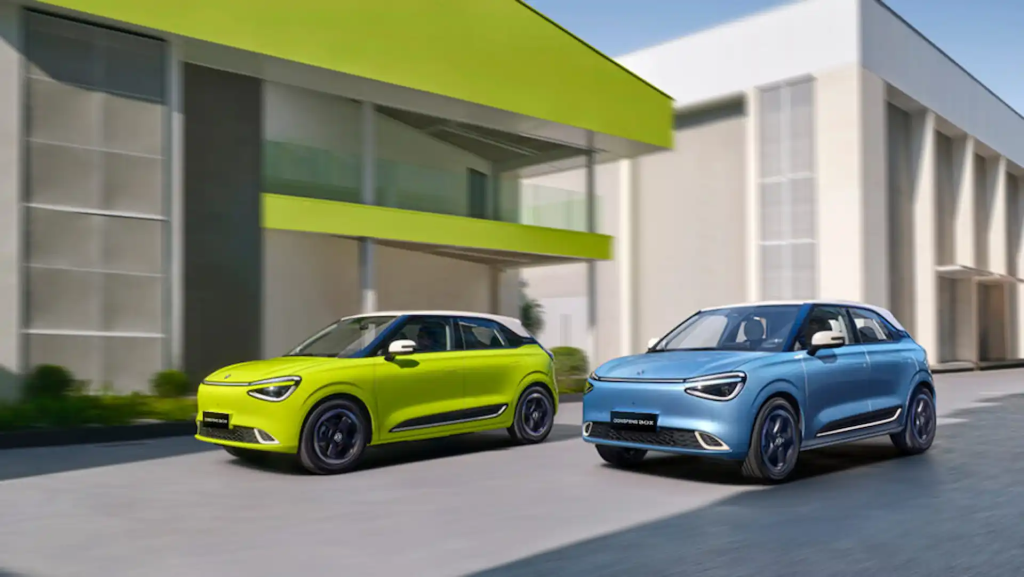
But is the Nammi Box actually a good EV to buy in Nepal? This review looks at its price, range, performance, comfort, practicality, ownership costs and overall suitability for Nepali roads.
Nammi Box Price in Nepal
The Nammi Box price in Nepal starts at NPR 32.49 lakh for the E2 and goes up to NPR 36.25 lakh for the E3. The E1 has been discontinued, while the currently available E2 uses a 70-kW motor with a 31.4-kWh battery, and the E3 gets a 49.5-kW motor with a larger 42.3-kWh battery.
| Variant | Battery | WLTP Range | Price |
|---|---|---|---|
| E2 | 31.4 kWh | 237 km | NPR 32.49 lakh |
| E3 | 42.3 kWh | 317 km | NPR 36.25 lakh |
The E2 is the most affordable option and makes the most sense for buyers whose driving is mainly around Kathmandu. While the E3 brings the larger battery and 317-km WLTP range, making it the more suitable choice for buyers who expect more frequent intercity travel.
Dual-Tone and Silver colour options cost an additional NPR 50,000 over the indicated variant price. Buyers choosing these finishes should therefore factor this extra cost into their overall purchase budget.
Specifications
The Nammi Box is a compact five-seat electric hatchback with a front-wheel-drive layout. In Nepal, it uses a 49.5-kW & 70kW motor which is available with either a 31.4-kWh or 42.3-kWh LFP battery, depending on the variant. Its 4,030-mm length and 2,660-mm wheelbase keep it compact enough for city driving while providing reasonable cabin space.
| Specification | Nammi Box E2 | Nammi Box E3 |
|---|---|---|
| Body type | 5-door electric hatchback | 5-door electric hatchback |
| Seating | 5 | 5 |
| Battery | 31.4 kWh LFP | 42.3 kWh LFP |
| Motor | 70 kW | 49.5 kW |
| Drive | Front-wheel drive | Front-wheel drive |
| Length | 4,030 mm | 4,030 mm |
| Width | 1,810 mm | 1,810 mm |
| Height | 1,570 mm | 1,570 mm |
| Wheelbase | 2,660 mm | 2,660 mm |
| Ground clearance | About 176 mm | About 185 mm (Updated 2026) |
| Top speed | About 140 km/h | About 140 km/h |
The 185-mm ground clearance of the newer E3 variant is a useful advantage for a compact EV in Nepal. It should provide better clearance over typical speed breakers and uneven urban roads, although the Nammi Box is still a hatchback rather than an SUV.
Range and Charging
The Nammi Box offers a 237-km WLTP range with the 31.4-kWh battery, while the 42.3-kWh E3 delivers 317 km WLTP. The larger battery is more suitable for buyers who regularly travel outside Kathmandu, while the smaller battery should be sufficient for everyday urban driving.
The Nammi Box supports Type 2 AC and CCS2 DC charging. Depending on the charging setup, a full AC charge takes around 5–12 hours, while DC fast charging can take around 30 minutes to reach 80%. The E3 can accept up to around 80 kW DC charging, making it more convenient for longer trips.
For home charging, a full charge costs roughly NPR 350–500 for the 31.4-kWh battery and NPR 500–650 for the 42.3-kWh battery, including charging losses. Actual range will vary with traffic, air-conditioning, passengers, temperature and Nepal’s hilly roads.
Performance and Driving
The Nammi Box uses a 49.5-kW electric motor with front-wheel drive. Its instant electric torque makes it responsive in Kathmandu’s stop-and-go traffic, while the available Eco, Normal and Sport modes allow drivers to adjust throttle response to suit different situations.
For Nepal’s roads, the Nammi Box is better suited to relaxed everyday driving than outright performance. The motor should handle normal city and highway driving comfortably, but long uphill sections with passengers or luggage can demand more from the powertrain. On two-lane highways, overtaking should therefore be planned rather than relying on strong acceleration.
The car’s quiet electric powertrain and regenerative braking also make it well suited to daily driving. On longer highway journeys, however, maintaining a steady speed and planning overtaking carefully will be important, particularly on Nepal’s winding and uphill sections.
Kathmandu and Hill Driving
The Nammi Box is well suited to Kathmandu’s urban driving. Its compact 4.03-metre length makes it easier to navigate crowded streets and parking spaces, while the 360-degree camera and parking sensors can be useful in tight areas. Instant electric torque also works well in stop-and-go traffic.
For hilly roads, the 49.5-kW motor should handle normal climbs, but performance can become less energetic on long and steep gradients, particularly with several passengers or luggage. The newer E3’s 185-mm ground clearance also gives it useful clearance for speed breakers and uneven roads. Regenerative braking can help control the car on descents, although drivers should still use the conventional brakes when necessary.
Overall, the Nammi Box is better suited to Kathmandu and moderate hill roads than demanding mountain routes. Deep potholes, sharp ramps and severely broken roads still require careful driving.
Interior and Practicality
The Nammi Box has a modern, technology-focused cabin that makes good use of its compact exterior. The 2,660-mm wheelbase provides reasonable space for a five-seat hatchback, while features such as the large infotainment display, digital instrument display, wireless charging and automatic air-conditioning add to its everyday convenience.
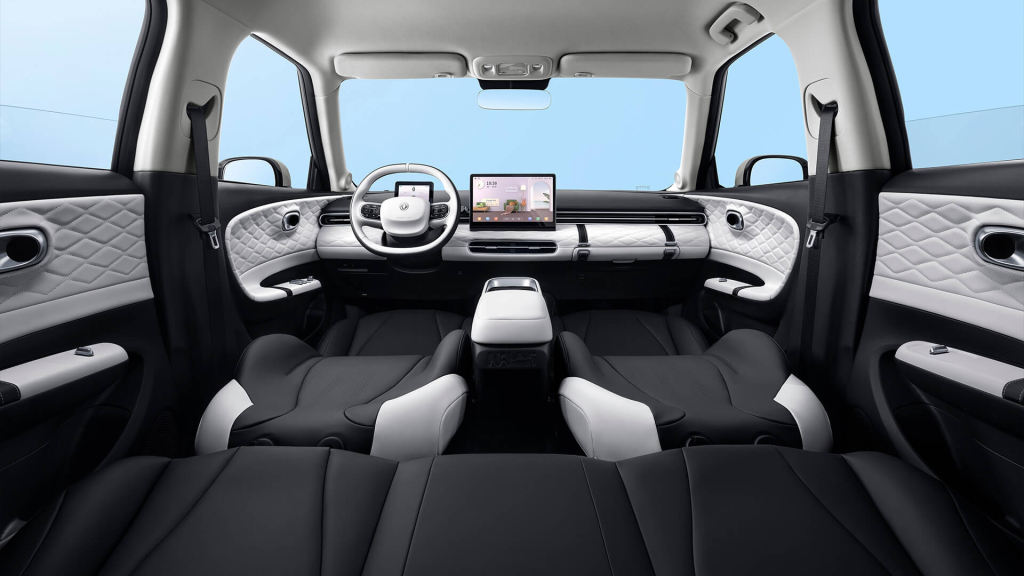
Rear-seat space: The cabin should be comfortable for two adults and children, making it suitable for small families. Three adults can fit in the rear, but the limited width makes it less comfortable for longer journeys.
Boot space: The Nammi Box is practical for groceries, backpacks and everyday luggage, although it cannot match the cargo capacity of a larger SUV. For a small family, the boot should be adequate for regular use, with the rear seats available when more luggage space is needed.
Overall, the Nammi Box offers a good balance of cabin space, technology and everyday practicality for its size, particularly for urban families and buyers who mostly drive around Kathmandu.
Safety and Technology
The Nammi Box comes with a useful range of safety equipment, including front airbags, ABS, electronic stability control, traction control, hill-start assist, ISOFIX and brake assist. Higher-equipped versions can also offer driver-assistance features such as lane-keeping assistance, automatic emergency braking and lane-departure warning.
The technology package is one of the Nammi Box’s stronger points. Depending on the variant, it can include a 12.8-inch infotainment screen, digital instrument display, wireless charging, smartphone connectivity, 360-degree camera and automatic parking. Some advanced driver-assistance features are also available depending on the Nepal specification.
However, safety deserves closer attention. The Nammi Box received a three-star Euro NCAP rating, with the assessment identifying some concerns in occupant protection and safety-assist performance. The tested vehicle was left-hand drive, so buyers in Nepal should confirm that the local right-hand-drive version has the same safety specification.
Overall, the Nammi Box offers plenty of technology for its class, but its three-star safety rating is an important consideration when comparing it with other EVs in Nepal.
Ride Quality and Ground Clearance
The Nammi Box uses a MacPherson strut front suspension and torsion-beam rear suspension, a setup that keeps the car compact and practical. On smoother roads, the suspension should provide a comfortable and quiet drive, but Kathmandu’s potholes, broken surfaces and sharp speed breakers can make the ride feel firmer, particularly with larger 17-inch wheels.
Ground clearance: The newer 2026 E3 offers 185 mm of ground clearance, which is useful for Nepal’s uneven roads and typical speed breakers. It gives the Nammi Box more confidence on rough urban roads, although it is still not designed for severe off-road use.
For everyday driving, slowing down before potholes and steep ramps is still important. The suspension and underbody can handle normal road imperfections, but deep potholes, rocky surfaces and sharply angled roads should be approached carefully.
Ownership Costs
The Nammi Box should be relatively affordable to run compared with a petrol car because it does not require engine oil, spark plugs or other conventional engine maintenance. With typical mixed-use efficiency of around 15–18 kWh per 100 km, home charging can cost roughly NPR 150–235 per 100 km, depending on electricity rates and charging losses.
Service and spare parts: MAW Vriddhi is the Nepal distributor, but buyers should check the availability of authorised service centres, high-voltage diagnostics, battery support and replacement parts outside Kathmandu. Routine items such as tyres, brake components, suspension parts, wipers and the 12-volt battery will still require maintenance.
Warranty: The Nammi Box comes with a warranty of 8 years or 200,000 km, whichever comes first. Customers can also opt for an extended warranty under MAW Vriddhi’s promotional offer, extending coverage to 11 years or 250,000 km. This is a strong ownership benefit, particularly for buyers planning to keep the EV for a long period.
Resale: The Nammi Box’s growing presence and low running cost could support future demand, but its long-term resale value is still difficult to predict. Battery health, warranty transferability, spare-parts support and the arrival of newer EVs will all influence its value.
Pros and Cons
Pros
- 317-km WLTP range with the E3
- 185-mm ground clearance on the newer E3
- Compact dimensions suited to Kathmandu
- Feature-rich cabin with a 360-degree camera
- Low day-to-day running costs
- CCS2 DC fast charging
- Five-seat layout with practical cabin space
- Long 8-year/200,000-km warranty, with an extended 11-year/250,000-km option available under the MAW Vriddhi promotional offer
Cons
- Three-star Euro NCAP safety rating
- 49.5-kW motor can feel limited on long, steep climbs
- Ride quality can become firm on rough roads, especially with larger wheels
- Long-distance travel still requires charging planning
- Future resale value is not yet well established
Alternatives
The BYD Dolphin is one of the closest alternatives to the Nammi Box in Nepal. It sits at a higher price point but offers a larger 44.9-kWh battery, a 70-kW motor and six airbags, making it worth considering for buyers who place greater emphasis on performance and safety. The Nammi Box, meanwhile, offers a more compact package, strong equipment levels and a lower entry price.
Other options such as the MG Comet, Proton e.MAS 5 and BYD Atto 1 can also appeal to buyers looking in the affordable EV segment. The right choice depends on whether your priority is city-focused driving, range, features, safety or overall value.
For a buyer primarily driving around Kathmandu, the Nammi Box remains a strong option because of its compact size, practical cabin and feature list. However, those who want stronger safety credentials or a more established alternative should also consider the BYD Dolphin.
Who Should Buy the Nammi Box?
The Nammi Box makes the most sense for buyers who primarily drive around Kathmandu and want a compact EV that is easy to use in traffic and parking. Its five-seat cabin, low running cost and feature-rich interior also make it suitable for small families.
The E3 is the better choice for buyers who travel outside the Kathmandu Valley more often, thanks to its larger battery and 317-km WLTP range. Its 185-mm ground clearance also adds useful practicality for Nepal’s uneven roads.
Overall, the Nammi Box is best suited to urban commuters, small families and buyers looking for a comfortable city EV with occasional highway and hill-road use.
Who Should Consider Alternatives?
The Nammi Box may not be the best choice if safety is your top priority, as its three-star Euro NCAP rating is an important consideration when comparing it with other EVs. Buyers who regularly travel long mountain routes should also consider alternatives if charging infrastructure along their usual routes is limited.
A larger EV may also make more sense if you frequently travel with a full load, need more boot space or expect stronger highway performance. Likewise, buyers looking for a more established resale and service network may prefer an alternative with a longer track record in Nepal.
Finally, if you want the longest possible range, a larger-battery EV may be worth considering. The Nammi Box E3’s 317-km WLTP range is useful, but frequent long-distance travel through Nepal’s hills still requires careful charging planning.
Final Verdict
The Nammi Box is a strong option for urban EV buyers in Nepal, particularly those who want a compact car with a feature-rich cabin, low running costs and enough ground clearance for everyday Nepali roads. Its 317-km WLTP range in the E3 also gives it useful flexibility for occasional longer journeys.
The E3 is the variant I would recommend for most buyers who can stretch their budget, thanks to its larger battery and 185-mm ground clearance. The long 8-year/200,000-km warranty, with an option to extend it to 11 years/250,000 km under MAW Vriddhi’s promotional offer, also adds confidence for long-term ownership.
However, the three-star Euro NCAP rating remains the biggest concern, while buyers who regularly travel long mountain routes may need a vehicle with greater range and stronger charging infrastructure.
Tecnech Rating: 7.8/10
| Category | Score |
|---|---|
| Design and Features | 8.5/10 |
| Kathmandu Usability | 8.5/10 |
| Range and Charging | 7.5/10 |
| Performance | 7/10 |
| Comfort and Practicality | 7.5/10 |
| Safety | 6/10 |
| Ownership | 8/10 |
| Overall | 7.8/10 |
Verdict: If your driving is mainly around Kathmandu with occasional highway and hill trips, the Nammi Box E3 is a compelling EV to consider. But if safety rating, extensive mountain travel or long-established resale confidence are your top priorities, it is worth looking at alternatives before making the final decision.